



Issue Ebookcover story
About Journal

Online ISSN: 2097-7042
Print ISSN: 1000-0607
CN: 11-2274/R
Governing Body: National Administration of Traditional Chinese Medicine
Sponsors: Institute of Acupuncture and Moxibustion, CACMS; China Association of Acupuncture-Moxibustion
Publishing Frequency: Monthly
Tel: +86-10-64089344
Email: zcyjbjb@vip.163.com
Address: 16 Nanxiaojie, Dongzhimennei, Beijing, China
Rankings  MORE
Most Viewed
Mt Downloados
Most Cited
- 01 Observation on the Therapeutic Effect of Acupuncture Treatment of Autism Children3351
- 02 Progress of Researches on Mechanisms of Acupuncture Underlying Improvement of Depression in the Past Five Years3277
- 03 Meta Analysis of Effectiveness of Acupoint Application Therapy for Infantile Diarrhea3104
- 04 Effect of Electroacupuncture Stimulation of "Guanyuan"(CV 4),Bilateral "Housanli"(ST 36),etc.on Anti-fatigue Ability and Liver Mitochondrial Respiratory Function in Ageing Rats with Yang-Deficiency3067
- 05 Considerations about Mechanisms of Acupuncture Therapy for Improving Hypertension by Regulating Immune System2994
- 06 Effects of Transcutaneous Electrical Acupoint Stimulation of "Zusanli"(ST 36) on Gastric Mucosal Injury in Exercise Stress-induced Gastric Ulcer Rats2959
- 07 Effect of Acupuncture of Ho(ST 36)-plus Mu(CV 12)-acupoints on Hypothalamic Gonadotropin-releasing Hormone mRNA and SP mRNA Expression in Stress-induced Gastric Ulcer Rats2946
- 08 Protective Effect of Electroacupuncture Intervention on Neurovascular Unit in Rats with Focal Cerebral Ischemia-reperfusion Injury2939
- 09 A Randomized Controlled Clinical Trial for Acupuncture Stimulation of Neiguan(PC 6) to Prevent Postoperative Nausea and Vomiting2885
- 10 Development of Studies on Neurochemical Mechanism of Acupuncture Underlying Improvement of Depression2881
SEE MORE
- 01 Discussion on the construction of standard system of moxibustion method4719
- 02 Research on Acupuncture Anesthesia-analgesia4675
- 03 Clinical observation on the efficacy of ringheaded thumb-tack needle therapy combined with tuina and active functional exercise in the treatment of neck-type cervical spondylosis3422
- 04 Clinical application characteristics of acupuncture and moxibustion in treatment of cervicogenic headache based on complex network analysis3254
- 05 New Trains of Thoughts About Acupuncture Analgesia—Acupuncture Analgesia May Involve Multi-dimensional Regulation of Pain3162
- 06 Paying Attention to the Heat Thermal Sensitivity of Moxibustion Is the Key for Raising the Curative Effect2985
- 07 Basic Rules and Characteristics of Acupoint Application Therapy Based upon Data Mining2964
- 08 New progresses of studies on essence of meridian-collaterals of traditional Chinese medicine2944
- 09 A Meta-analysis on Acupuncture Treatment of Polycystic Ovary Syndrome2895
- 10 Rules of acupoint selection in treatment of cancer-related insomnia with acupuncture and moxibustion based on data mining technology2874
SEE MORE
- 02 New Evidence to Substantiate the Frequency Specificity of Acupuncture-induced Analgesia0
- 03 Research on Acupuncture Anesthesia-analgesia73
- 04 Paying Attention to the Heat Thermal Sensitivity of Moxibustion Is the Key for Raising the Curative Effect0
- 06 New Trains of Thoughts About Acupuncture Analgesia—Acupuncture Analgesia May Involve Multi-dimensional Regulation of Pain35
- 07 Effect of Electroacupuncture Intervention on Enteric Microecology in Ulcerative Colitis Rats0
- 08 Progress of Research on Mechanisms of Moxibustion Intervention Underlying Improvement of Blood Circulation18
- 09 Effect of Electroacupuncture at "Tianshu"(ST 25) on Colonic Smooth Muscle Structure and Interstitial Cells of Cajal in Slow Transit Constipation Rats0
- 10 Basic Rules and Characteristics of Acupoint Application Therapy Based upon Data Mining0
SEE MORE
- Latest Articles
- Cover Story
- Online First
- Archive
- Extended abstract in English
Volume 51 Issue 11,2026
Temperature-dependent effects of thermal stimulation at “Zusanli” (ST36) on visceral hyperalgesia and SRD neuronal electrical activity in rats with acute colonic mucosal injury
Abstract:ObjectiveTo observe the effect and dose-response relationship of thermal stimulation at “Zusanli” (ST36) with different temperatures on alleviating visceral hyperalgesia in rats with acute colonic mucosal injury, so as to explore its underlying mechanism focusing on the electrical activity of the subnucleus reticularis dorsalis (SRD) in the medulla.Methods(1) Eighteen SD rats were randomly divided into normal and model groups, with 9 rats in each group. The acute colonic mucosal injury model was established by mustard oil enema. The structural and pathological changes of colonic tissue were observed by colonoscopy and HE staining. The expressions of calcitonin gene-related peptide (CGRP) and transient receptor potential vanilloid 1 (TRPV1) in rat colonic tissue were detected by immunofluorescence staining. (2) Thirty SD rats were randomly divided into normal group, model group, 44 ℃, 48 ℃, and 52 ℃ thermal stimulation groups (n=6 in each group). After modeling, thermal stimulation with the corresponding temperature was applied to “Zusanli” (ST36) in each stimulation group. Visceral pain was induced by colorectal distension. The area under the curve (AUC) of rectus abdominis electromyogram (EMG) was evaluated by EMG recording, and the inhibition rate of noxious EMG by thermal stimulation at different temperatures was calculated. (3) Pseudorabies virus (PRV) retrograde tracing was employed in 3 normal rats to label SRD neurons receiving dual projections from both ST36 and the colon. (4) Twenty-four model rats were randomly divided into 44 ℃, 48 ℃, and 52 ℃ thermal stimulation groups, with 8 rats in each group. Multi-channel in vivo electrophysiological technique was used to record the electrical activity of SRD neurons. The changes in SRD neuronal firing within 1 h of acute mustard oil perfusion and the inhibitory effect of thermal stimulation at different temperatures on their firing were observed.ResultsAfter modeling and compared with the normal group, the rats’ colonic mucosa showed congestion, edema, structural destruction, and obvious inflammatory cell infiltration, with significantly increased distribution of CGRP and TRPV1 positive nerve fibers (P<0.05) and a significantly increased AUC of rectus abdominis EMG (P<0.001). Compared with the model group, After 48 ℃ and 52 ℃ thermal stimulation, the evoked rectus abdominis EMG was significantly reduced (P<0.001); while there was no statistically significant difference in AUC after 44℃ thermal stimulation. The inhibition rates at 48 ℃ and 52 ℃ were significantly higher than that at 44℃ (P<0.05), with no significant difference between 48 ℃ and 52 ℃. Morphologically, PRV retrograde tracing revealed neurons in the medullary SRD region that were single-labeled from the colon or ST36, as well as double-labeled neurons. Electrophysiologically, the firing frequency of SRD neurons increased rapidly at 5 min after mustard oil instillation, and the increase persisted for 30 min (P<0.05). During this high-firing period, thermal stimulation at 48 ℃ and 52 ℃ significantly suppressed the firing frequency (P<0.01, P<0.05), whereas 44 ℃ stimulation had no such effect.ConclusionNoxious thermal stimulation at 48 ℃ and 52 ℃ can effectively alleviate visceral hyperalgesia in rats with acute colonic mucosal injury, which may be related to inhibiting nociceptive discharge of medullary SRD neurons. Considering both central inhibitory effect and local skin safety, 48 ℃ appears to be the optimal intervention temperature.Keywords:Thermal stimulation;Visceral hyperalgesia;Temperature;Subnucleus reticularis dorsalis150|73|0Updated:2026-11-18Research progress on brain-body interaction mechanisms of acupuncture in treating primary dysmenorrhea
Abstract:Primary dysmenorrhea (PD) is a common gynecological disorder affecting women of reproductive age worldwide, characterized by high prevalence, recurrent attacks and impaired quality of life. Acupuncture has definite therapeutic effects on PD, and related studies on its mechanism are increasingly deepening. The core pathogenesis of PD is the disordered brain-body bidirectional interaction. From the perspective of brain-body interaction, this paper systematically summarizes the mechanisms of acupuncture in treating PD, including synchronously regulating central networks such as default mode network, sensorimotor network, and descending pain modulatory system, modulating hypothalamic-pituitary-ovarian axis and hypothalamic-pituitary-adrenal axis, and modulating signaling pathways including Toll-like receptor 4/nuclear factor-κB, and phosphatidylinositol 3‑kinase/protein kinase B/mammalian target of rapamycin, as well as improving uterine local pathological status, optimizing uterine blood flow, correcting prostaglandin imbalance, and relieving smooth muscle spasm. These effects synergistically block the brain-body vicious cycle of PD and achieve multi-system, multi-level holistic regulation and long-lasting analgesia.Keywords:Primary dysmenorrhea;Acupuncture;Brain-body interaction;Central regulation;Neuroimmunology261|166|0Updated:2026-11-18Effects of acupoint catgut embedding regulating AMPK/SIRT1/PGC‑1α pathway on intestinal microbiota and inflammatory response in simple obese rats
Abstract:ObjectiveTo explore the effects of acupoint catgut embedding on intestinal microbiota and inflammatory response in simple obese rats and its underlying mechanism.MethodsSD rats were fed with high‑fat diet to establish simple obesity models, and the model rats were randomly divided into model group, orlistat group, catgut embedding group, AMP‑activated protein kinase (AMPK) activator (AICAR) group, and catgut embedding + AMPK inhibitor (Compound C) group, with 8 rats in each group. Another 8 SD rats were set as the control group. In the catgut embedding group, catgut embedding was performed at acupoints “Zhongwan” (CV12), “Guanyuan” (CV4), “Zusanli” (ST36), and “Fenglong” (ST40), once a week for 4 consecutive weeks. Rats in the orlistat group received intragastric administration of orlistat at 0.048 g/kg once daily for 4 weeks. Rats in the AICAR group were given tail‑vein injection of AICAR at 50 mg/kg once daily for 4 weeks. Rats in the catgut embedding + Compound C group received catgut embedding combined with tail‑vein injection of Compound C at 250 μg/kg. Body weight and body length were measured and Lee’s index was calculated. Fasting plasma glucose (FPG) and fasting insulin (FINS) were detected and the insulin resistance index was calculated. Serum levels of total cholesterol (TC), triglyceride (TG), low‑density lipoprotein‑cholesterol (LDL‑C), and high‑density lipoprotein‑cholesterol (HDL‑C) were determined by biochemical analyzer. Serum contents of tumor necrosis factor‑α (TNF‑α), interleukin‑6 (IL‑6), lipopolysaccharide (LPS), and interleukin‑10 (IL‑10) were measured by ELISA. Pathological changes of colon tissues were observed by HE staining. Immunofluorescence was used to detect the positive expression of Occludin and Claudin‑1 in colon tissue. The abundance of intestinal bacterial genera was determined by PCR. Western blot was applied to detect the protein expression of AMPK/sirtuin‑1 (SIRT1)/peroxisome proliferator‑activated receptor‑γ coactivator‑1α (PGC‑1α) pathway in colon and adipose tissues.ResultsCompared with the control group, the model group showed significantly increased body weight, Lee’s index, serum TC, TG, LDL‑C, TNF‑α, IL‑6, LPS, FPG, FINS, insulin resistance index, as well as the abundances of Enterococcus and Desulfovibrio (P<0.05); while serum IL‑10 and HDL‑C levels, the abundances of Bifidobacterium, Lactobacillus, and Akkermansia, the fluorescence intensity of Occludin and Claudin‑1 in colon tissues, the p‑AMPK/AMPK ratio, and the protein levels of SIRT1 and PGC‑1α in colon and adipose tissues were decreased (P<0.05). Compared with the model group, the orlistat group, catgut embedding group and AICAR group exhibited significantly decreased body weight, Lee’s index, serum TC, TG, LDL‑C, TNF‑α, IL‑6, LPS, FPG, FINS, insulin resistance index, and the abundances of Enterococcus and Desulfovibrio (P<0.05); whereas serum IL‑10 and HDL‑C levels, the abundances of Bifidobacterium, Lactobacillus, Akkermansia, the fluorescence intensity of Occludin and Claudin‑1 in colon tissues, the p‑AMPK/AMPK ratio, and the protein levels of SIRT1 and PGC‑1α in colon and adipose tissues were elevated (P<0.05). Compared with the catgut embedding group, the catgut embedding + Compound C group had significantly higher body weight, Lee’s index, serum TC, TG, LDL‑C, TNF‑α, IL‑6, LPS, FPG, FINS, insulin resistance index, and abundances of Enterococcus and Desulfovibrio (P<0.05); while serum IL‑10 and HDL‑C levels, the abundances of Bifidobacterium, Lactobacillus, Akkermansia, colon Occludin and Claudin‑1 fluorescence intensity, p‑AMPK/AMPK ratio, and SIRT1 and PGC‑1α protein expression in colon and adipose tissues were reduced (P<0.05).ConclusionAcupoint catgut embedding can alleviate systemic low‑grade inflammatory response, regulate blood lipid metabolism, modulate the abundance of beneficial intestinal bacteria, and repair intestinal barrier function in simple obese rats. Its mechanism may be related to the AMPK/SIRT1/PGC‑1α signaling pathway.Keywords:Acupoint catgut embedding;Simple obese rats;Inflammatory response;Intestinal microbiota;AMPK/SIRT1/PGC‑1α signaling pathway146|46|0Updated:2026-11-18Mechanism of acupuncture improving thrombolysis safety in ischemic stroke based on necroptosis mediated by RIPK1/RIPK3/MLKL signaling pathway
Abstract:ObjectiveTo observe the effect of acupuncture on inhibiting necroptosis mediated by the receptor-interacting protein kinase 1 (RIPK1)/receptor-interacting protein kinase 3 (RIPK3)/mixed lineage kinase domain-like protein (MLKL) signaling pathway in rat model of ischemic stroke, so as to reveal the mechanism underlying the improvement of ultra-time-window thrombolysis safety by acupuncture.MethodsNinety-nine male successful modeling SD rats were randomly divided into the model, 6 h thrombolysis, and acupuncture+6 h thrombolysis groups, with 33 rats in each group. In addition, 33 SD rats were randomly selected as the sham-operation group. Except for the sham-operation group, rats in the other groups were subjected to the autologous thromboembolism method to establish the ischemic stroke model. Rats in the 6 h thrombolysis group were treated with intravenous thrombolysis using recombinant tissue plasminogen activator (rt-PA) at 6 h after the successful modeling. Rats in the acupuncture+6 h thrombolysis group were additionally treated with acupuncture at bilateral “Neiguan” (PC6) and “Shuigou” (GV26) for 20 min after the thrombolysis. Neurological function was evaluated by Bederson score. The cerebral infarction volume was measured by 2,3,5-triphenyltetrazolium chloride staining. Blood-brain barrier (BBB) permeability was detected by Evans blue permeability assay. Brain water content was measured by the volume specific gravity method. Hemoglobin concentration was detected by spectrophotometry. The protein expressions of RIPK1, RIPK3, and p-MLKL were detected by Western blot. The mRNA expressions of RIPK1, RIPK3, and MLKL were detected by real-time PCR. The co-localization of p-MLKL and endothelial cells was detected by double immunofluorescence staining.ResultsAfter modeling, the cerebral blood flow of rats significantly decreased, and the neurobehavioral scores increased (P<0.01). At 24 h after successful modeling, compared with the sham-operation group, the model group had a significant increase in neurobehavioral scores, percentage of infarct volume, and BBB permeability (P<0.01), as well as an elevation in the protein expression level of RIPK1 (P<0.05) , the mRNA expression levels of RIPK1, RIPK3, and MLKL in the ischemic penumbra (IP,P<0.01, P<0.05), and increased percentage of co-localization of p-MLKL and endothelial cells in the IP(P<0.01). Following intervention and compared with the model group, the 6 h thrombolysis group had a further increase in BBB permeability, brain water content, and cerebral hemoglobin concentration (P<0.01, P<0.05); elevated protein expression levels of RIPK3 and p-MLKL in the IP (P<0.05); increased mRNA expression levels of RIPK3 and MLKL in the IP (P<0.05); and an increased percentage of co-localization of p-MLKL and endothelial cells in the IP (P<0.01). Compared with the model group, the acupuncture+6 h thrombolysis group showed decreased neurobehavioral scores, percentage of infarct volume, BBB permeability, and brain water content (P<0.01, P<0.05); decreased protein and mRNA expression levels of RIPK1 in the IP (P<0.05); and a reduced percentage of co-localization of p-MLKL and endothelial cells in the IP (P<0.05). Compared with the 6 h thrombolysis group, the acupuncture+6 h thrombolysis group demonstrated a significant decrease in all the aforementioned indicators (P<0.01, P<0.05).ConclusionTimely intervention with acupuncture can improve neurological function, reduce cerebral infarct volume, lower BBB permeability, and decrease the incidence of thrombolytic complications in rats with ischemic stroke after thrombolysis, thereby improving the safety of thrombolysis. Its mechanism may be related to the inhibition of endothelial cell necroptosis mediated by the RIPK1/RIPK3/MLKL signaling pathway.Keywords:Acupuncture;Ischemic stroke;Necroptosis;Thrombolysis safety186|76|0Updated:2026-11-18

SEE MORE
- Special Issues

"Body-Brain Mechanisms of Acupuncture Effects" Special Column

Special Column for the 50th Anniversary of Founding

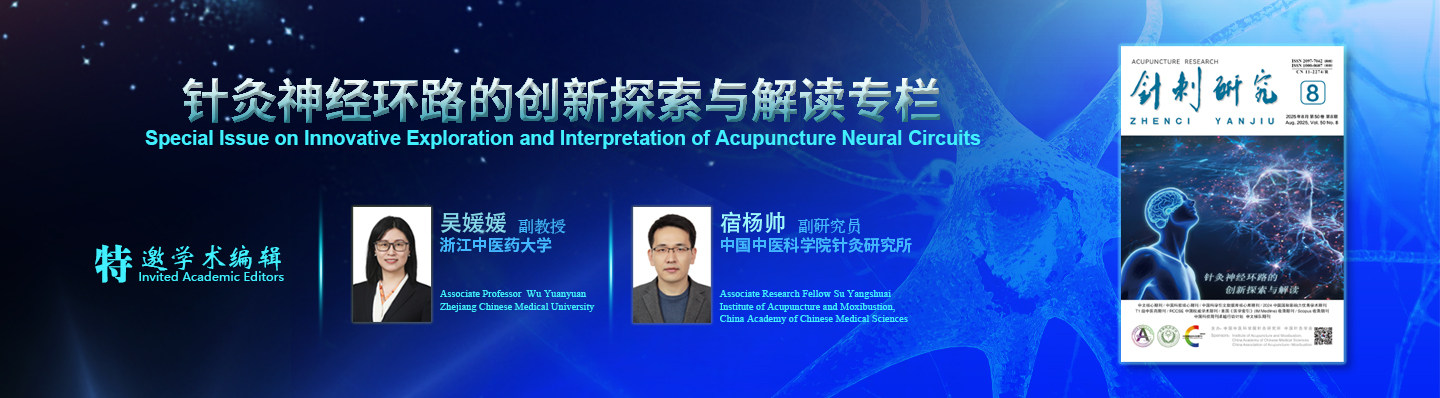
Special Issue on Innovative Exploration and Interpretation of Acupuncture Neural Circuits

key scientific questions in acupuncture and moxibustion support the development of modern acupuncture medicine

Special lssue on Acupuncture-moxibustion and Tumor

Special lssue on Acupuncture-moxibustion and Translational Medicine

Special lssue on Acupuncture-moxibustion and Chronic Inflammatory Diseases

Special Issue on Interdisciplinary and Acupuncture Development
SEE MORE
Journal videos
 00:00:00
Interpretation of the Cover of Acupuncture Research Issue 8, 2026
2026-08-17Play Total:28- 00:01:21
Interpretation of the Cover of Acupuncture Research Issue 6, 2026
2026-06-15Play Total:23 - 00:00:00
Interpretation of the Cover of Acupuncture Research Issue 5, 2026
2026-05-18Play Total:2 - 00:00:00
Interpretation of the Cover of Acupuncture Research Issue 3, 2026
2026-04-21Play Total:3 - 00:01:26
Interpretation of the Cover of Acupuncture Research Issue 2, 2026
2026-04-21Play Total:9 - 00:05:24
Clinical efficacy of shallow-needle therapy combined with estazolam on insomnia of liver stagnation transforming into fire pattern: a randomized controlled trial
2024-08-14Play Total:26 - 00:05:53
Preface:calling for research on translational acupuncture
2024-08-14Play Total:12 - 00:06:00
Two methods of MCAO modeling and some common errors
2024-08-14Play Total:20
SEE MORE
